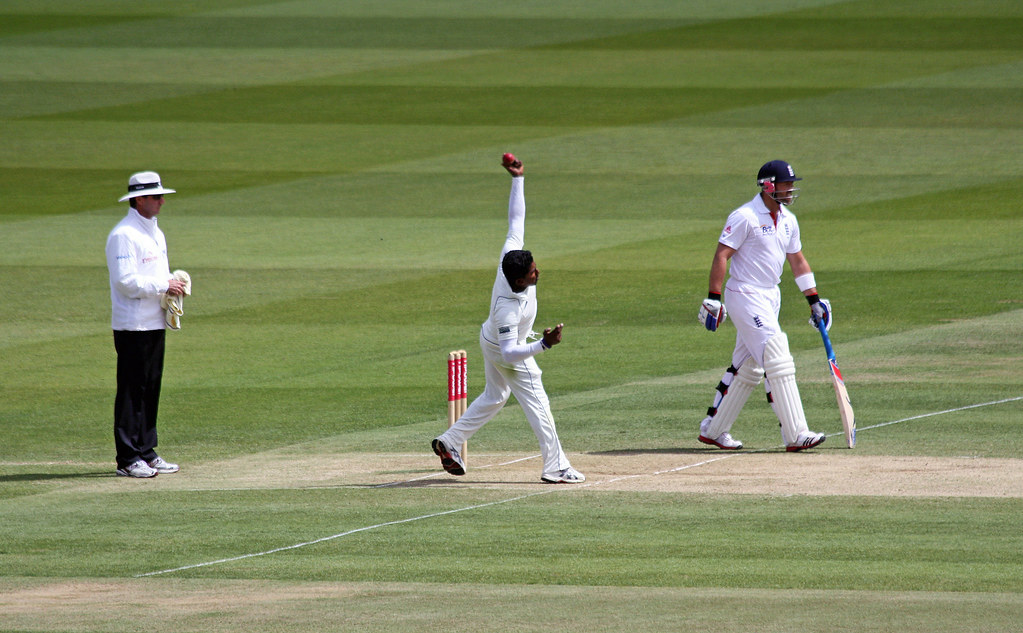

Fast bowling is a statement. Spin is a question, asked again and again, slightly differently each time, until the batsman finally gives the wrong answer.
On the dust-dry pitches of the subcontinent, the slow bowler is king. The ball grips, fizzes, and deviates in ways that turn batting from a contest of reflexes into a contest of patience. The duel can last an hour and be decided by a single delivery.
The Grammar of Flight
Great spinners do not simply turn the ball. They vary its flight, its pace through the air, the angle of release. They invite the drive, then pull the length back. They build a false sense of comfort and then puncture it. The best of them seem to know what a batsman is thinking before the batsman does.
You do not beat a good spinner with your bat. You beat him with your head, and most days he is thinking faster than you are.
A former opening batsman, on touring Asia
It is why spin remains the subcontinent’s great inheritance. The pitches demand it, the crowds understand it, and the children who grow up on them learn to bowl it before they can properly drive.
An Art Under Pressure
Shorter formats have squeezed the slow bowler’s room to breathe. There is less time to set a trap, less margin for the loose ball that buys a wicket two overs later. And yet spin endures, because batsmen still fear what they cannot predict. The conversation goes on — quieter than pace, but every bit as deadly.